

The initiative qualified 60 families across four municipalities in Minas Gerais in the raising of native stingless bees, pairing sustainability with economic development
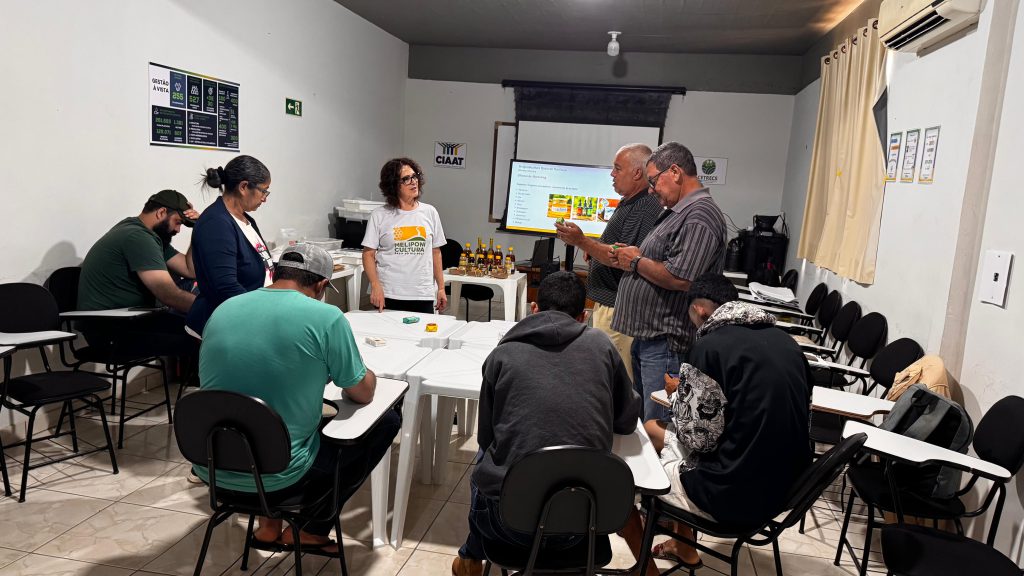
The Rio Doce Basin has been the stage for an initiative seeking to reconcile biodiversity preservation with the socioeconomic development of local communities: the Meliponiculture project. A technique for raising native stingless bees was presented as a sustainable income-generating alternative and has directly benefited 60 families in the municipalities of Mariana, Sem Peixe, Tumiritinga, and in Ilha Brava, a district of Governador Valadares.
Furthermore, the activity is grounded in the ecological role of bees. The pollination carried out by these species is essential for reforestation and the balance of local ecosystems, in addition to enabling the production of high-value-added inputs.
The project was structured in stages ranging from the delivery of inputs to the commercialization of products. Each participating family received 10 hives of native bees of the uruçu-amarela species (Melipona mondury).
Throughout the process, participants received continuous technical monitoring, including monthly visits, guidance on basic and advanced management, sanitary practices, qualification and training in good hygiene and collection practices, and workshops focused on the production of bee-products, such as honey, propolis, pollen, and handmade soaps.
Carried out under the New Rio Doce Agreement, the initiative began in February 2024 and was concluded in February of this year.
Impact and market
Beyond environmental gains, the initiative focused on strengthening local entrepreneurship. Producers participated in marketing and commercialization qualification and training, which culminated in business fairs, expanding the possibilities for market entry of the products.
"We seek to promote participant autonomy, strengthening meliponiculture as a sustainable income-generating alternative," highlighted Andréia Dias, Environmental Analyst of the Samarco Biodiversity team.
The conclusion of the qualification and training cycle demonstrated that coexistence with native bees, besides being safe, represents a viable path for the environmental and economic recovery of the region.
For more information, visit samarco.com/reparacao.