

The project supports the reproduction of endangered species and increases the chances of their reintroduction into the wild, contributing to the recovery of the region's ecosystems.
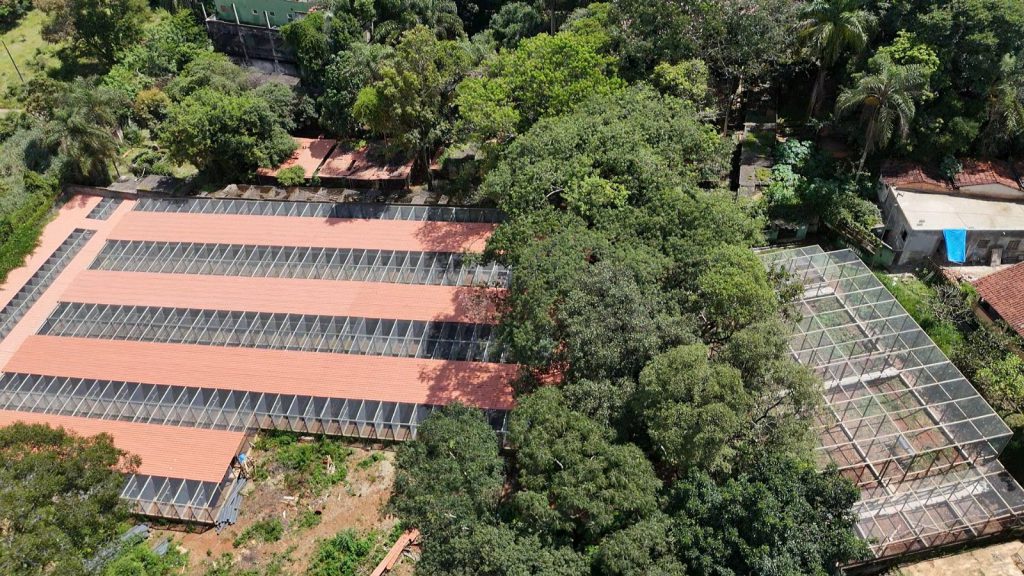
The southeastern curassow and the jacutinga, two threatened birds of the Atlantic Forest that are essential for forest regeneration, have had their conservation strengthened in the Rio Doce Basin. In a partnership with Crax – the Wildlife Management and Reproduction Research Society – Samarco completed a project that significantly increased the reproductive capacity of these species and advanced the preparation of birds for reintroduction into the wild.
The initiative led to the construction of 170 aviaries and the implementation of four climate-treated aviaries, structures that allow the animals to be prepared for their return to their natural environment. With this, the project not only increased the captive population, but also created concrete conditions for future releases and increased the chances of survival of the species in the wild.
During the 2025/2026 breeding season, Crax reported that over 112 jacutinga chicks were born, more than double the initial target. Furthermore, 25 breeding pairs of each species were formed, strengthening a genetically suitable stock and ensuring the continuity of breeding and reintroduction efforts.
The support also expanded the technical and operational capacity of Crax, an institution that has been working on the conservation of endangered species since 1987. The work integrates actions in a controlled environment (ex situ conservation), which are fundamental for the reproduction and protection of species, with strategies in the natural environment (in situ conservation), including release and monitoring programs. This set of actions directly contributes to the increase in the populations of these birds and to the balance of the ecosystems where they live.
The project is part of the Action Plan for Terrestrial Biodiversity Conservation, under the responsibility of Samarco, and is aligned with the environmental remediation actions set out in the New Rio Doce Agreement.
According to biologist Andressa Gatti, responsible for leading the work carried out by Samarco, the completion of the cycle represents concrete progress in the conservation of the species. “By strengthening the structure and technical capacity of Crax, we are expanding not only the reproduction of these birds, but also the conditions for their reintroduction into nature. This is an important step towards increasing the chances of survival for these species and contributing to the recovery of the ecosystems in the Rio Doce Basin," she says.
Roberto Azeredo, the creator and legal representative of Crax, highlights the practical gains of the initiative. “We have maintained this work for decades with very limited resources of our own. The completion of this investment in infrastructure and equipment acquisition allows for a leap in the number of birds bred in captivity and reintroduced into the wild, significantly increasing the chances of conservation of the southeastern curassow and the jacutinga in the Rio Doce Basin,” he explains.
Main impacts of the initiative
● Increase in the population of endangered species: formation of 25 breeding pairs per species and generation of more than 112 jacutinga chicks.
● Progress in reintroduction into the wild: implementation of acclimatization structures that prepare the birds for their return to their natural environment.
● Strengthening long-term conservation: expanding Crax's technical and operational capacity.
● Contribution to environmental recovery: support for the regeneration of ecosystems, since the species play a role in seed dispersal.
● Basis for continued actions: a permanent structure that allows for the expansion of breeding, release, and monitoring programs.
For more information on the remediation projects and Samarco's actions under the New Rio Doce Agreement, visit www.samarco.com/reparacao.