

2026 World Water Day campaign highlights preservation and restoration efforts in the regions where Samarco operates
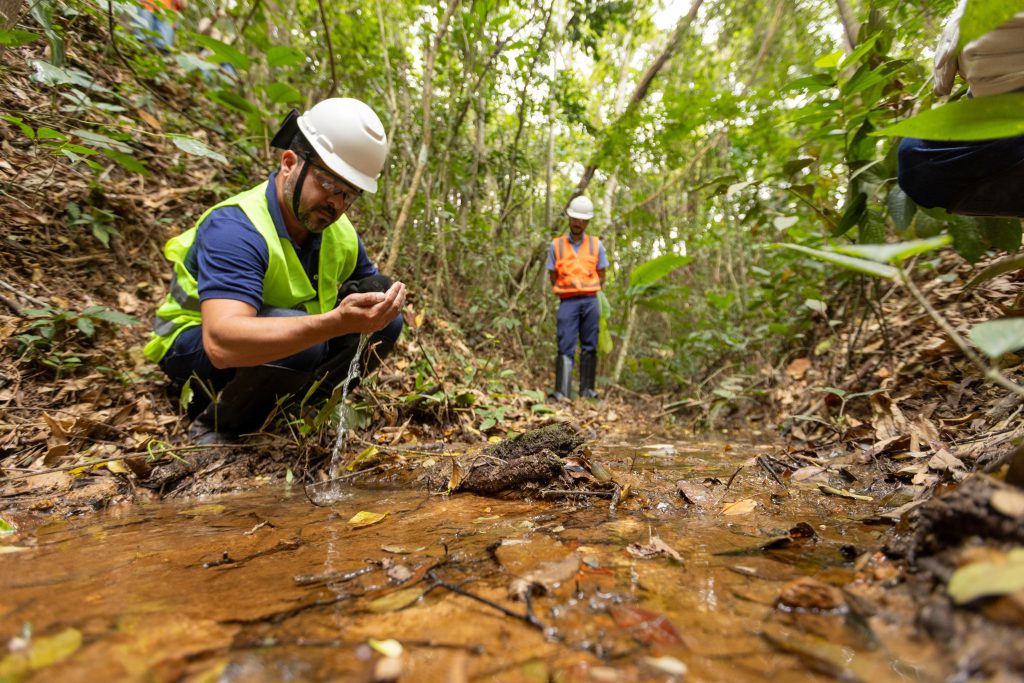
With the theme “Every protected spring helps guarantee water security,” Samarco’s 2026 World Water Day campaign reinforces the importance of protecting and restoring springs for the water security of the communities where it operates. In Minas Gerais and Espírito Santo, the company monitors about 4,700 springs, which are essential to water availability for ecosystems and local communities.
Throughout the Rio Doce Basin, 4,400 springs have been fenced off and protected as part of the obligations under the New Rio Doce Agreement. On Samarco properties, 274 springs are being monitored, of which 204 have already been restored and are protected, while another 70 are in the process of being restored and protected.
This year’s campaign also highlights the conservation of source areas and the responsible use of water resources, with about 50 actions, such as short courses, guided visits, and theater, aimed at employees, communities, schools, and partners.
Samarco develops ongoing environmental programs focused on protecting and restoring springs and supports nearby conservation units, such as Serra do Gandarela National Park. “Samarco supports actions such as terrestrial and aquatic fauna monitoring, fire prevention and firefighting, hydrological monitoring, air quality monitoring, and environmental education, safety, and surveillance programs in these areas,” explains Samarco Environmental Analyst Ana Paula Correa.
At its Mariana (MG) and Anchieta (ES) operations, the company maintains Permanent Preservation Areas (APPs) and other areas, such as riverbanks, springs, and groundwater recharge zones. Environmental management practices are adopted, such as erosion control, maintenance of native vegetation, and land-use restrictions, contributing to water infiltration, reduced sedimentation, and the stability of watercourses.

Water resources in operations
Internal water management is another strategic pillar for Samarco, with significant advances in water-use efficiency. In 2025, the company achieved a global average recirculation rate of 87.7%, the result of ongoing investments in technology and process improvements. This performance is also reflected in its operating units, with rates of 85.9% in Germano and 99.4% in Ubu.
Reparation in the Rio Doce Basin
In the context of the New Rio Doce Agreement, spring restoration is part of the effort toward definitive reparation. The goal is to restore 5,000 springs on a compensatory basis. So far, 4,400 springs have been fenced off and protected.
The Governador Valadares region has established itself as a restoration hub in Minas Gerais, with 1,376 fenced and protected springs across 23 municipalities. In Espírito Santo, the Colatina region has 340 fenced and protected springs across six municipalities.
These actions help increase the quantity, reliability, and quality of water, benefiting the population, especially the farmers on whose properties the springs are located. The activities include fencing, soil preparation, planting native forest species, and protection against wildfires through firebreaks.
In addition, water quality is monitored at 82 points along 690 kilometers of rivers. In February 2026, the monitoring program completed 100 sampling campaigns. The results are available at monitoramentoriodoce.org.
Water resources management
Samarco is launching a comprehensive, strategic study to assess, through an integrated approach, the quality and quantity of water resources across its entire operational area. The work covers the full extent of Samarco’s operations, from Germano to Ubu, encompassing the Piracicaba, Piranga, Santa Bárbara, and Benevente river basins, which are strategic regions for business continuity and sustainability.
The study focuses on consolidating technical information on surface and groundwater availability, water and effluent quality, multiple water uses, and associated risks, integrating Samarco’s existing data with official public databases and specialized technical analyses.
Its main outcome will be a report that will serve as a technical and strategic basis for strengthening Samarco’s corporate water governance. This material will support the definition of guidelines, responsibilities, and water management strategies, with a focus on current and future operational safety, risk mitigation, and long-term planning.
For more information, visit samarco.com.